Imports of non-animal origin products into Great Britain
Controls are in place under UK law to make sure food and feed products imported into Great Britain meet GB standards. Non-animal origin food and feed imports are subject to the requirements of general food and feed safety and hygiene legislation.
In addition, specific food and feed products are classed as ‘High-Risk Food and Feed of Non-Animal Origin (HRFNAO)’. Such products are subject to statutory official controls by Port Health Authorities at the GB border.
Read More
Imports of HRFNAO are checked at a Border Control Post (BCP) approved to handle each type of product. Felixstowe BCP is approved to inspect imports of all categories of HRFNAO except chilled feed imports subject to official controls. Harwich BCP is approved to inspect imports of all categories of HRFNAO.
We follow a rigorous process which includes document checks and physical product checks to establish the safety of imported products, and we charge a fee for the service which is payable by the importer.
The inspection facilities are approved by the Food Standards Agency (FSA) and Department for Food, Environment and Rural Affairs (DEFRA), and are audited annually by inspectors from the FSA and Animal and Plant Health Agency (APHA) to ensure standards are maintained.
Non-animal origin imports through the Port of Felixstowe are inspected at one of the two approved inspection facilities for HRFNAO. One facility is for refrigerated products; the other is for ambient temperature products. A separate allergen inspection area is also available for nut products to be inspected and sampled.
Read More
There is one facility at Harwich BCP which can be used for refrigerated and ambient consignments. Processes are in place to keep nut products separate from other foodstuffs.
The border control post facilities are owned and operated by the Port owner which presents consignments at the facilities on behalf of the importer, or person responsible for the load, for Suffolk Coastal Port Health Authority to inspect and examine.
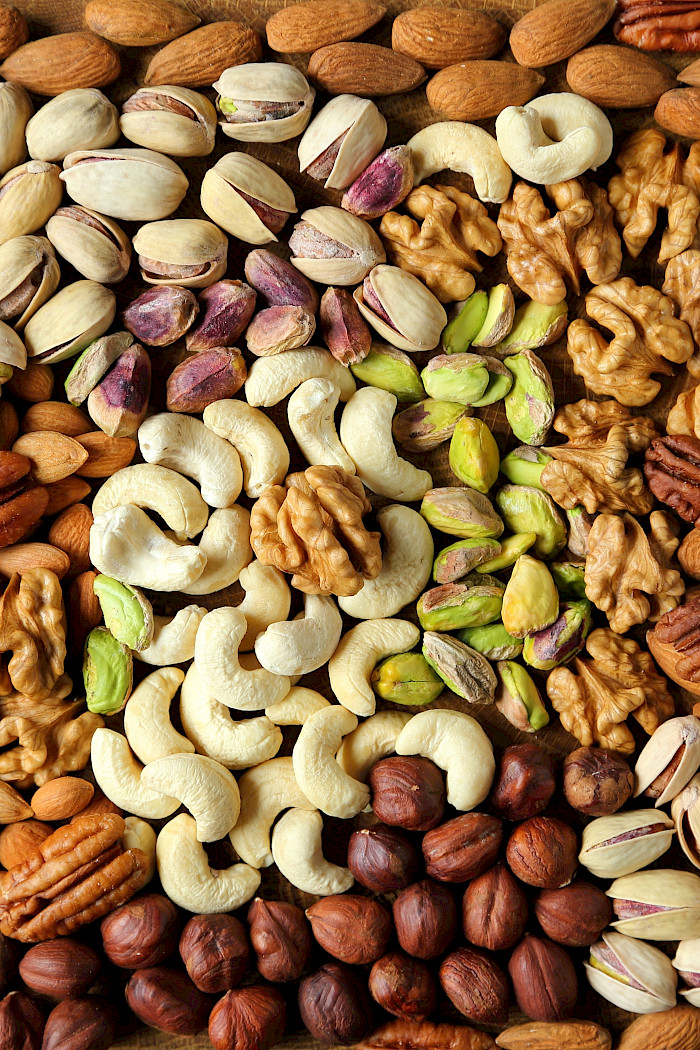
Food and feed that pose risks to health are specifically controlled by UK law. This includes products identified as having an emerging risk, such as products subject to aflatoxin contamination (including nuts, dried fruits and spices) or pesticide contamination.
Products requiring a CHED-D can be found here.
Read More
General guidance on importing food and feed products is available on the Food Standards Agency (FSA) website: https://www.food.gov.uk/
Importing products of non-animal origin - https://www.food.gov.uk/business-guidance/importing-products-of-non-animal-origin
Importing High-Risk Food and Feed of Non-Animal Origin (HRFNAO) into Great Britain - https://www.food.gov.uk/business-guidance/importing-high-risk-food-and-feed-of-non-animal-origin-hrfnao-into-great-britain#foodstuffs-with-current-restrictions
For a complete list of foodstuffs with current GB import restrictions, please refer to the FSA website: https://www.food.gov.uk/
Foodstuffs with GB import restrictions - https://www.food.gov.uk/business-guidance/foodstuffs-with-gb-import-restrictions
The list of emerging risk products is reviewed and updated annually by the FSA.
Under Article 1(3) of assimilated CIR 2019/1793 (as amended) personal imports of controlled food and feed imports (HRFNAO) are permitted provided that the net weight does not exceed 30kg, and the person importing the consignment can prove that it is not intended to be placed on the market but is for their personal consumption or use.
Consignments that meet the definition of a personal import will not be subject to CHED-D controls (see below).
Approval of Border Control Posts (BCPs)
Consignments of HRFNAO which are intended for import into or transit across GB must be arrive at a port with a BCP that is approved to handle the products concerned. The list of UK BCPs can be found here.
Please note that Felixstowe is not approved to handle chilled high-risk feed of non-animal origin and such consignments intended for import into or transit across GB must not be landed at Felixstowe.
Requirements for CHED-Ds
In accordance with GB assimilated CIR (EU) 2019/1013 the person responsible for the load must notify the Port Health Authority responsible for the BCP at least one working day before the expected arrival of the consignment of controlled products which are intended for import into or transit across GB.
Notification must be by submission on IPAFFS of a CHED-D with Part 1 completed. IPAFFS is an IT platform operated by DEFRA that should be used to generate the CHED-D.
Read More
The model of the CHED-D is provided in retained CIR (EU) 2019/1715 (Annex II, Part 2, Section D).
Guidance notes on how to complete the CHED-D in IPAFFS can be found here. These guidance notes apply to imports through Felixstowe and Harwich only.
Please double-check that CHED-Ds are fully and accurately completed before submitting. Arranging for amendments to be made is time-consuming and causes delay.
Legal obligations when submitting a CHED-D
The CHED-D is completed by the person responsible for the load and is a legal document. As the person responsible for the load, when you submit the CHED-D you are confirming that:
I, the undersigned operator responsible for the consignment detailed above, certify that to the best of my knowledge and belief the statements made in Part I of this document are true and complete, and I agree to comply with the requirements of retained Regulation 2017/625 on official controls, including payment for official controls, as well as for re-dispatching consignments, quarantine or isolation of consignments, or costs of destruction and disposal where necessary.
Read More
As an individual committing such a statement you should ensure you know how these liabilities will be covered by you or your employer as applicable and that you or your company have the necessary contractual arrangements to recover such costs from the person or company instructing you where applicable. In particular, costs of destruction can be considerable.
The Person Responsible for the Load (PRFL) can be the importer or an agent acting on their behalf but to complete Part 1 of the CHED-D they must be a UK entity with an IPAFFS account registered with a UK address.
Submission of CHED-D and required documents
The CHED-D must be created and submitted on IPAFFS at least one working day prior to the arrival of the consignment. Copies of the required documents should be uploaded to the CHED-D notification on IPAFFS. These must always include copies of the commercial documents: bill of lading/CMR, invoice and packing list. If an official health certificate and lab reports are required as part of the import conditions these documents will need to be submitted to us in original format in addition to copies being uploaded to the CHED-D in IPAFFS before we can complete Port Health checks.
For consignments arriving by ferry (RoRo) the minimum notification period is at least six hours prior to arrival.
How many CHED-Ds are required?
The number of CHED-Ds required depends on the product, the contaminant and where it is listed in the legislation. This is because the definition of consignment changes within the legislation based on these. In GB assimilated Regulation (EU) 2019/1793 definitions are in Article 2. Please note the definition of ‘consignment’ is different for products listed in Annex I compared to the definition for products listed in Annex II.
Read More
If you submit a CHED-D and we (SCPHA) assess that more are required, we will advise you of this and why.
If you submit a CHED-D and the ‘consignment’ is selected for sampling, then the results will apply to everything on that one CHED-D. Splitting the ‘consignment’ after sample results are received will not be possible.
What food/feed products will need a CHED-D?
Please follow the link for the most up-to-date list of products requiring a CHED-D for import into GB.
Release of consignments
The CHED-D is also used by the BCP to show the outcome of the checks. Part II of the CHED-D is completed by BCP staff in IPAFFS when all of our checks have been completed indicating the checks carried out and the outcome of those checks.
Legal requirement for the completed CHED-D to accompany the consignment to the delivery address
The Port Health endorsed CHED-D will no longer be printed by Port Health. It will be the responsibility of the person responsible for the load to ensure that the delivery address has a copy of the fully completed CHED-D – see assimilated CDR (EU) 2019/1602. This can be achieved by downloading the Port Health endorsed CHED-D from IPAFFS and either emailing it to the delivery address or printing it and posting it to the delivery address.
Legal requirement to deliver goods to the destination declared on the CHED-D
It is an offence to deliver the consignment to a delivery address other than that declared on the CHED-D. If for any reason the delivery address has to change after the CHED-D is issued, you must notify us so we can make a record of this for traceability purposes.
Documentary check
All CHED-D controlled imports are subjected to a documentary check including an assessment of the CHED-D, health certificate and results of sampling and analysis (where required) and accompanying commercial documentation, which will include bill of lading, invoice and packing list.
If the consignment being imported requires a health certificate it will need to meet the requirements of the model health certificate as shown on https://www.gov.uk/government/publications/high-risk-food-and-feed-not-of-animal-origin-hrfnao-health-certificates.
SCPHA have produced some guidance notes on how to complete health certificate GBHC176. These guidance notes can be accessed by clicking here.
Identity check
Consignments may also be subject to an identity check to verify that the product, labelling and other necessary product and/or package information conform to the declaration on the health certificates and EU legislative requirements.
If your consignment is accompanied by a health certificate and test report, the batch/lot number shown on the health certificate must match the batch/lot number on the test report. The same batch/lot number must also be on all the packages covered by the health certificate. These requirements can be found in GB assimilated Commission Implementing Regulation (EU) 2019/1793 – see Articles 9, 10 and 11.
Physical check
A percentage of consignments must also be physically checked to confirm that the product is fit for its intended purpose. The physical check may include sampling the product to look for pathogenic micro-organisms or illegal contaminants such as pesticide residues, aflatoxins, heavy metals, or process contaminants (as specified by the law).
Physical checking frequency
GB law specifies the rates of physical checks on specified products from specified countries.
This is updated periodically as per relevant GB legislation updates enacted.
Satisfactory checks
On satisfactory completion of the checks, consignments may be released for free circulation into the GB internal market.
Unsatisfactory checks
Products failing to satisfy import conditions may be
- re-exported to a country outside of Great Britain (conditions apply) or
- destroyed or
- subjected to special treatment or to any other measure to ensure compliance (subject to restrictions, conditions apply) or
- used for purposes other than those for which it was originally intended (subject to restrictions, conditions apply)
However, if the consignment is deemed to be a risk to human or animal health, or where the person responsible for the consignment fails to comply with a direction to re-export, it must instead be sent for destruction.
Read More
All costs for destruction are to be met by the person responsible for the consignment.
Where a notice is served requiring that product is to be re-exported or destroyed, an appeal may usually be brought to a Magistrates Court. This right must be exercised within one month of the notice being served. On receipt of a notice, recipients are advised to contact their legal advisers if they wish to appeal against the notice.
As an importer you are responsible for the cost incurred by the Port Health Authority of checking the products you are importing. There are standard charges for checks under CHED-D import controls. Additional charges may be added for laboratory examination or analysis if required.
All charges must be paid before the consignment can be released for free circulation.
For details, please refer to our fees section.
Current law allows a reduced level of checks to be carried out at import on food and feed where specified pre-export checks have been agreed and completed in the country of origin under the provisions of GB assimilated Regulation (EU) 2017/625 (Article 73); where an Article 73 test report and certificate are not provided, the frequency of checks is 5%.
Under these provisions there are currently concessions permitted for certain food from specified countries regarding the presence of mycotoxins. This is put in place under the provisions of GB assimilated Commission Implementing Regulation (EU) 2015/949.
Read More
To qualify for reduced checks under the provisions of this legislation each consignment must be accompanied by:
- A certificate in accordance with the model set out in Annex II to the regulation, completed, verified & signed by the relevant Competent Authority in the country of origin.
- A report containing the results of sampling and analysis conducted by a laboratory approved by the relevant Competent Authority in the country of origin.
- Furthermore, each consignment must have an identity code present on the certificate, report and each individual bag or packaging form.
Please note that consignments which do not have the certificate and laboratory report can still be imported. Such consignments imported without the certificate and laboratory report will not qualify for reduced checks, increasing the likelihood of examination and sampling to check compliance with relevant standards applicable in GB.
The following table (Annex I to the Regulations) indicates the products and countries where concessions may be applied:-
|
Food |
CN code |
Country of Origin |
Mycotoxin |
Frequency of physical checks (%) at import |
|
Wheat |
1001 |
Canada |
Ochratoxin A |
<1 |
|
Wheat flour |
1101 00 |
|||
|
Almonds, in shell |
0802 11 |
United States of America |
Aflatoxins |
<1 |
|
Almonds, shelled |
0802 12 |
Import guidance
Animal Origin
Learn More >
Plastic Kitchenware
Learn More >
Organics
Learn More >
IUU
Learn More >
Composites
Learn More >